A Complete Roofing System Built for New England
When repair is no longer practical, we install a complete roofing system selected for the building, New England weather, appearance, and budget. We handle the full process — deck inspection, underlayment, flashing, ventilation, materials, and cleanup — and review the finished work with you before we leave. Start with a free, no-obligation estimate.
BBB Accredited Business · A+ BBB Rating — verify live at launch · CT HIC.0660468 · Free Estimates · Residential & Commercial
When Replacement Makes More Sense Than Repair
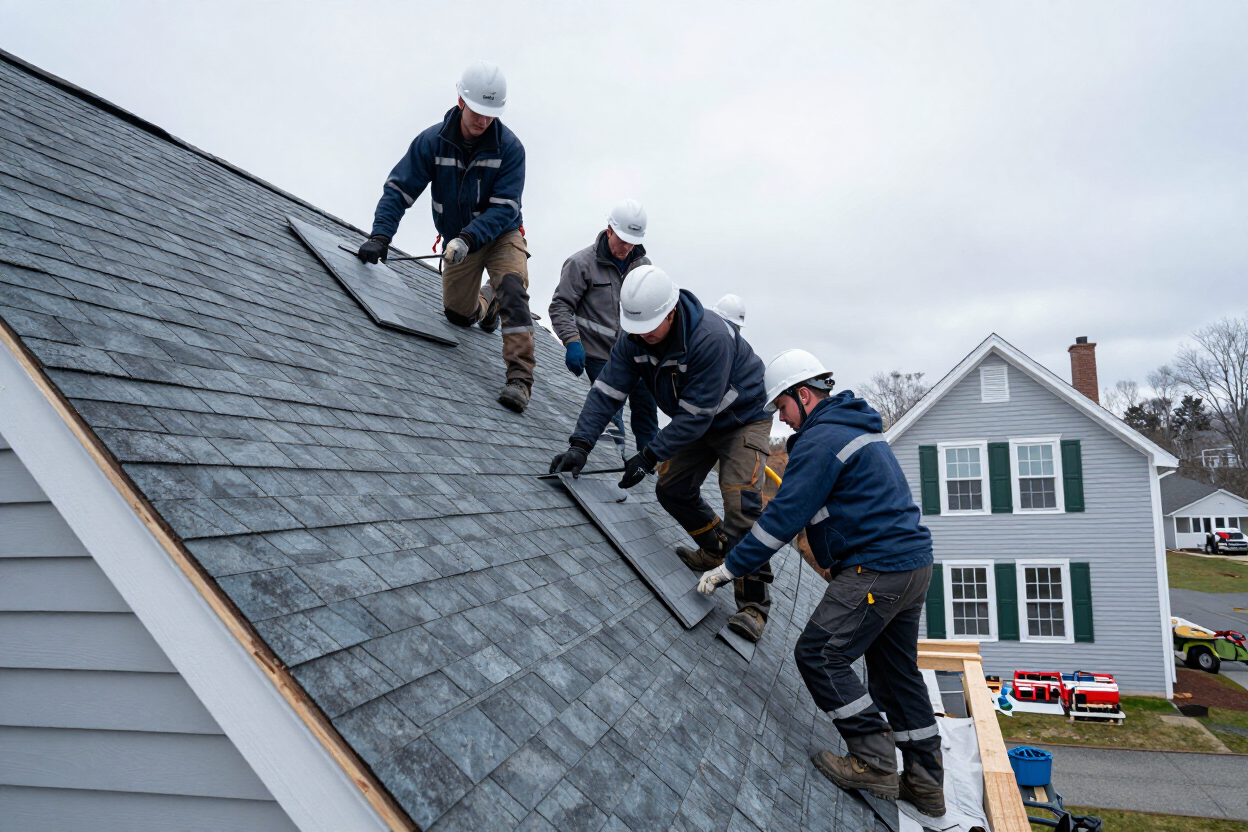
Not every roof problem is a repair job. These are the conditions that typically indicate a full replacement is the more practical and cost-effective path.
Age and overall wear — Most asphalt shingle roofs reach the end of their service life between 20 and 30 years. If the system is approaching or past that range and showing widespread granule loss, curling, or cracking, repair dollars extend its life only marginally.
Recurring or multiple leaks — A single isolated leak is usually repairable. When leaks reappear in different locations after prior repairs, the system is failing broadly and patching becomes a cycle of diminishing returns.
Deck damage or significant moisture intrusion — If decking shows rot, soft spots, or structural compromise from prolonged moisture, a full tear-off and replacement lets us address the substrate properly rather than installing new materials over a damaged base.
Extensive storm damage — When a storm event damages a large percentage of the roof surface — missing shingles across multiple slopes, widespread impact damage — replacement typically provides better long-term protection than piecemeal repair, and may align with an insurance claim scope.
Incompatible or discontinued materials — If the existing system uses materials that are no longer available or manufactured in a way that prevents a clean match, repairs will be visually inconsistent and may not perform to the same standard.
Roofing Systems for New England
We match material to building type, slope, exposure, appearance, and budget. Every recommendation accounts for the demands of New England weather.
Asphalt Shingles
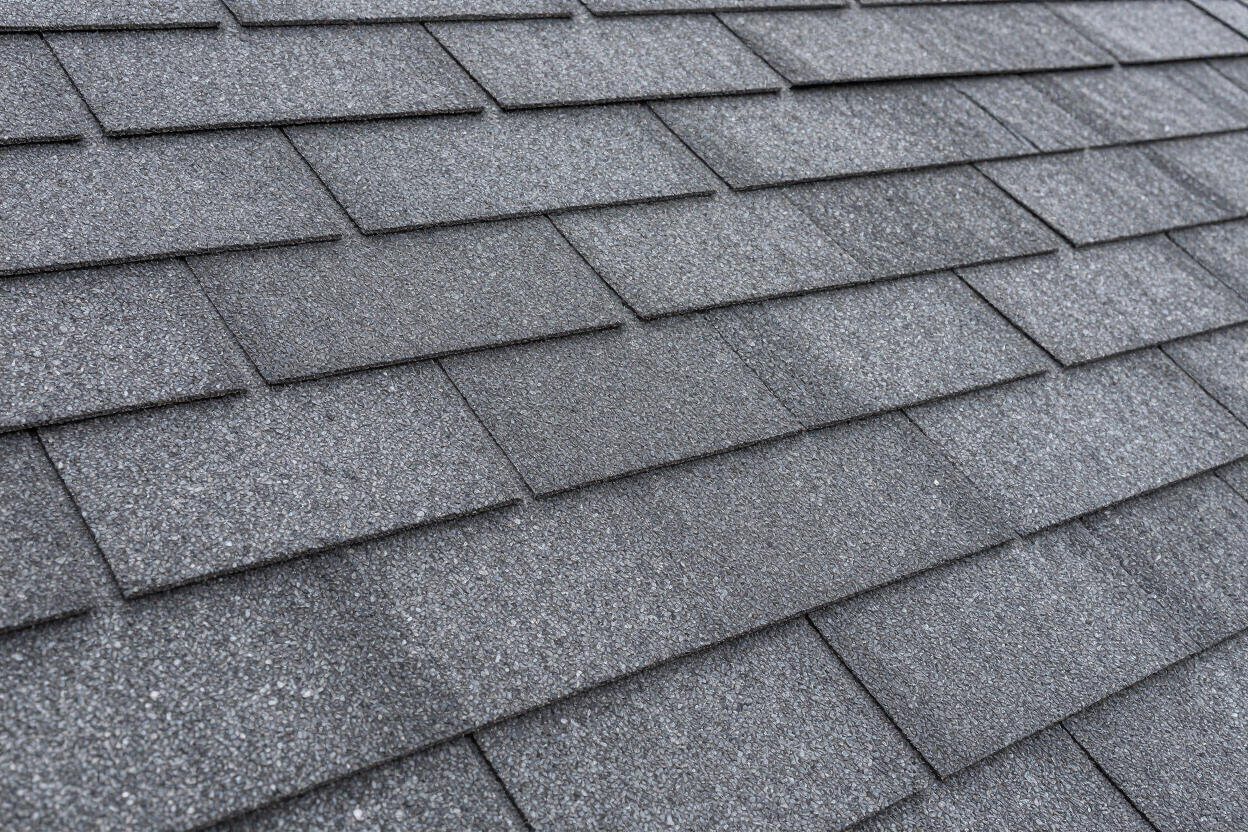
The most widely installed roofing system in New England. Architectural (laminated) shingles offer a layered, dimensional appearance and are available in a wide range of colors. Impact-resistant grades are worth considering in hail- and storm-active areas. Cost-effective with broad contractor support and widely available matching materials.
Metal Roofing
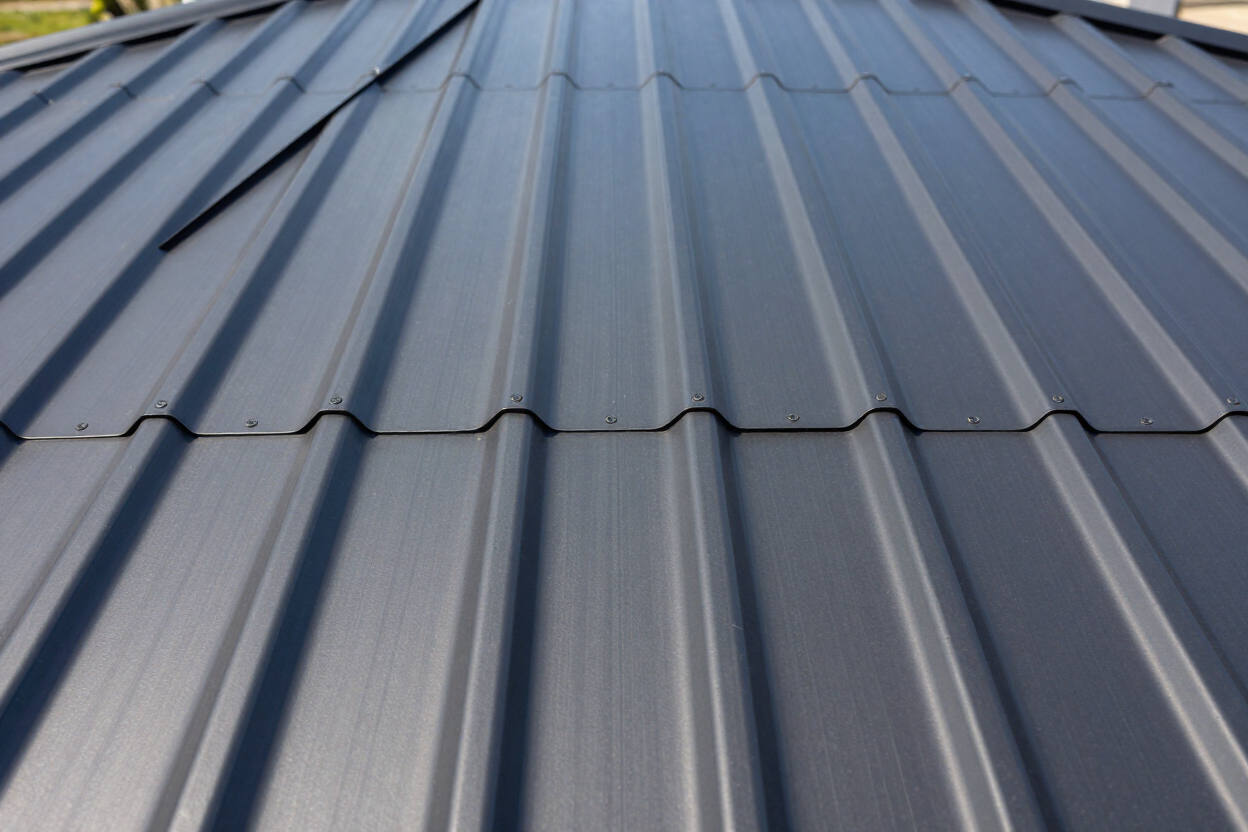
Standing-seam and exposed-fastener metal panels perform well in heavy snow and high-wind conditions common across New England. Metal sheds ice load, resists wind uplift, and carries a long service life. Available in steel and aluminum in a range of profiles and painted finishes.
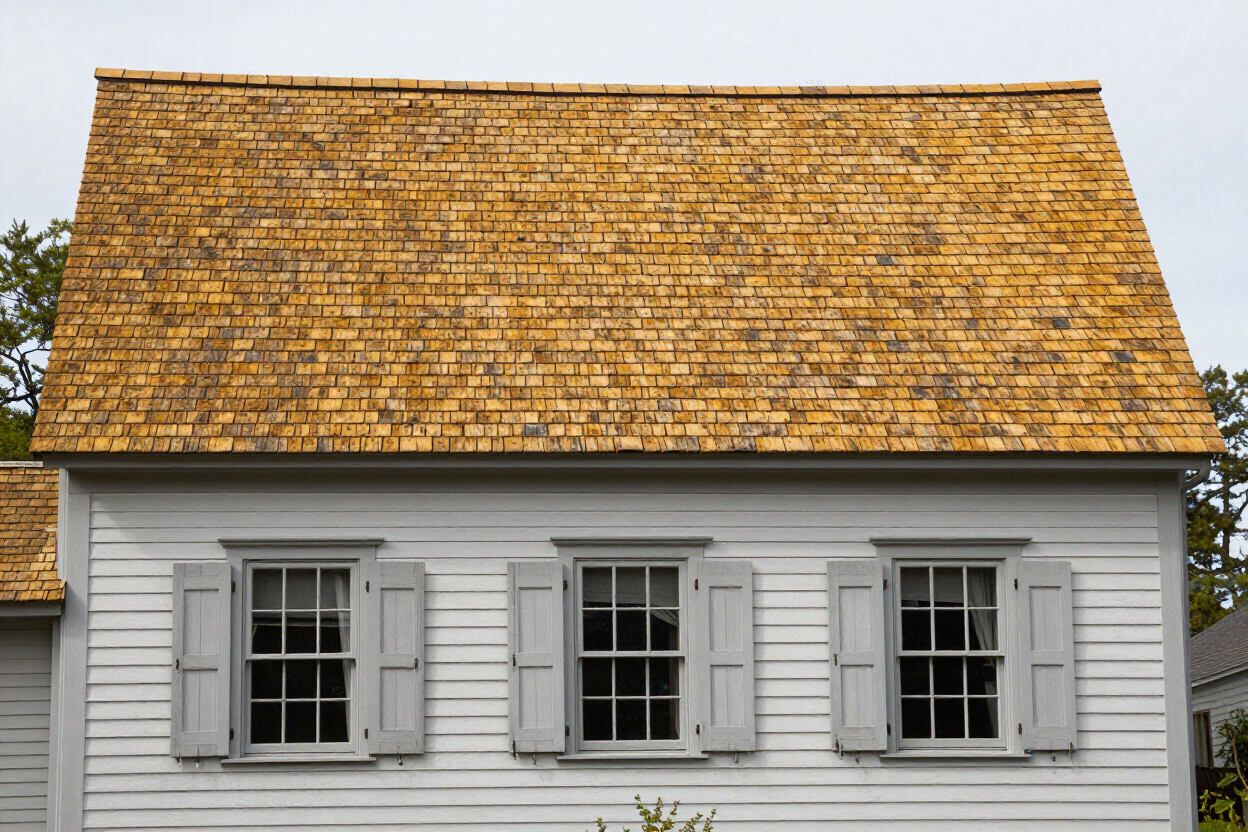
Cedar Shake & Shingles
Cedar provides a natural, traditional appearance that suits New England historic and coastal properties. Proper installation with adequate ventilation and periodic treatment extends service life in humid or shaded conditions. Recommend pressure-treated or fire-treated grades where local codes require.
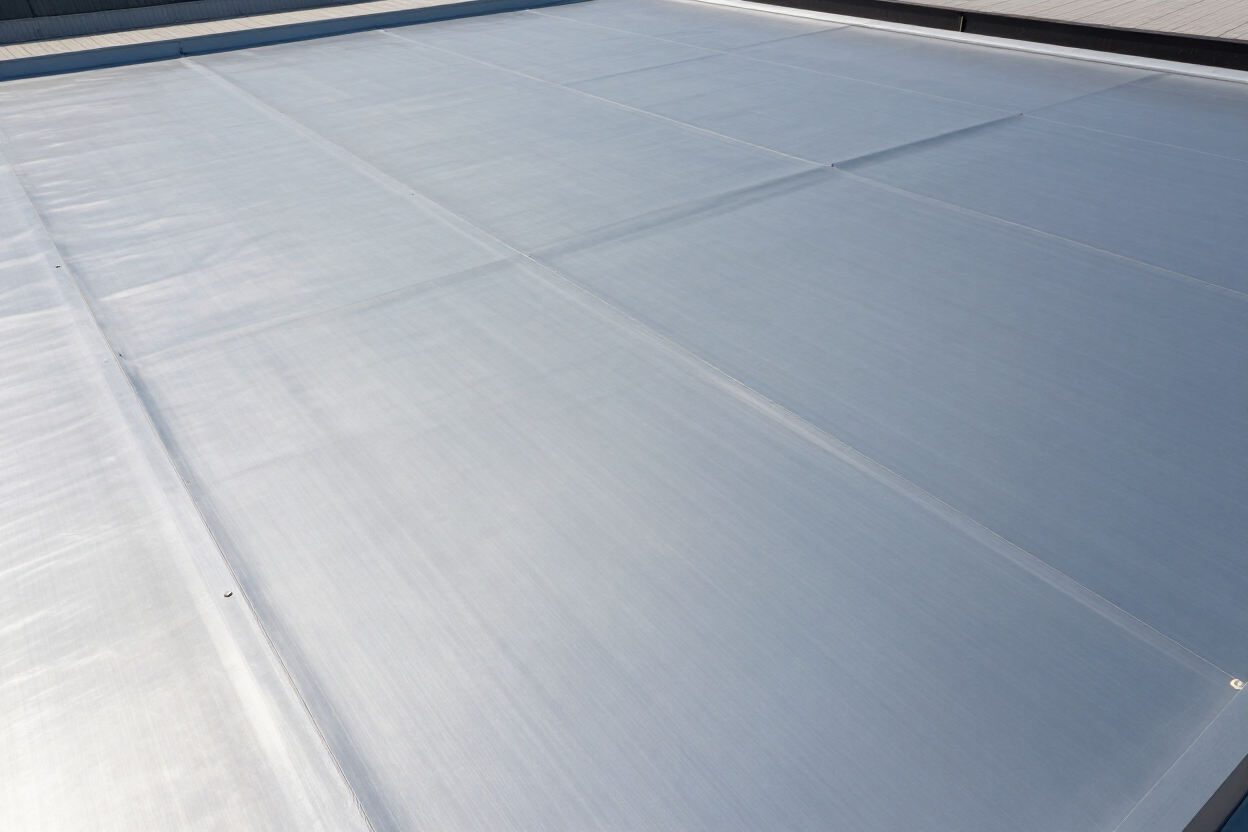
Flat & Low-Slope Membranes
Low-slope commercial and residential roofs require membrane systems rather than pitched materials. Available systems include EPDM, TPO, PVC, and modified bitumen. Specific systems are published after verification of the crew's installation experience and manufacturer qualifications.
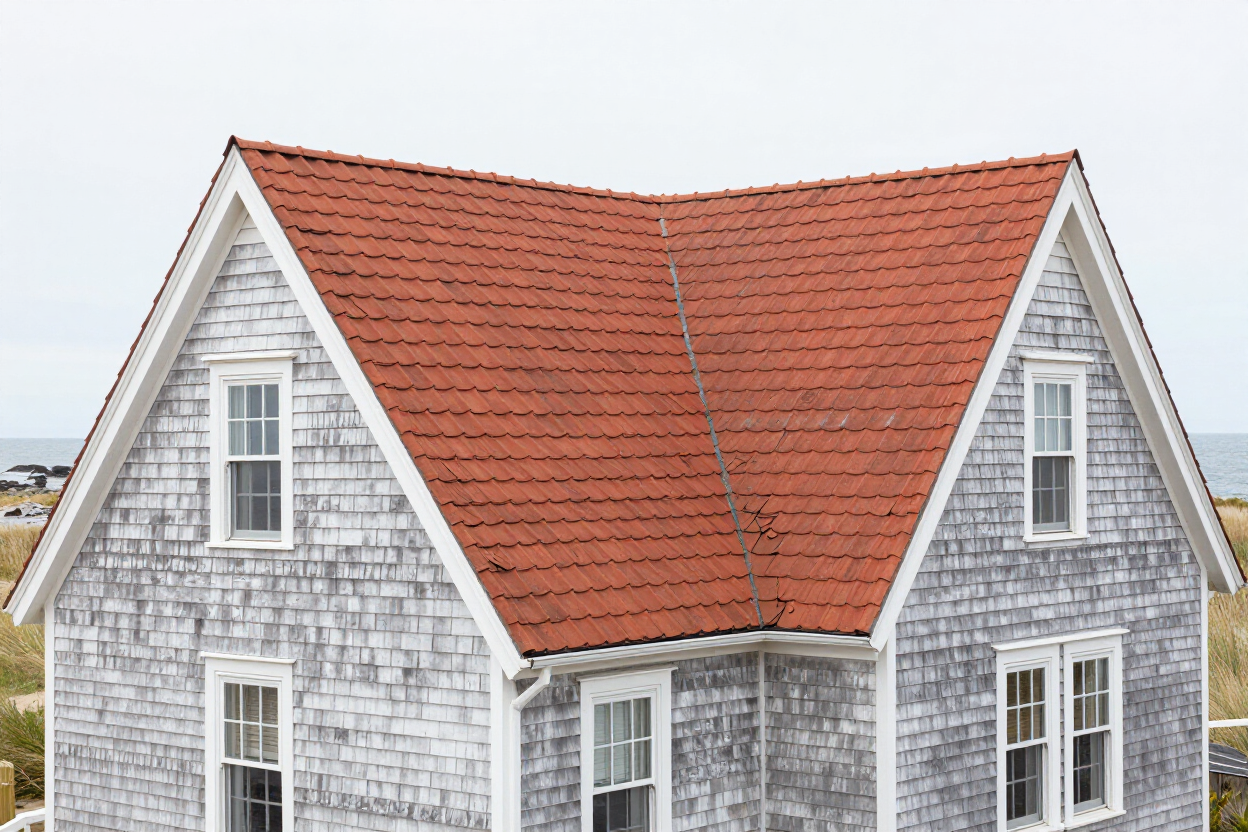
Clay & Concrete Tile
Clay and concrete tile provide distinctive appearance, longevity, and thermal mass. Structural load requirements must be confirmed before installation. Suited to certain coastal and high-end residential applications in the region. Ask about availability and structural suitability for your property.
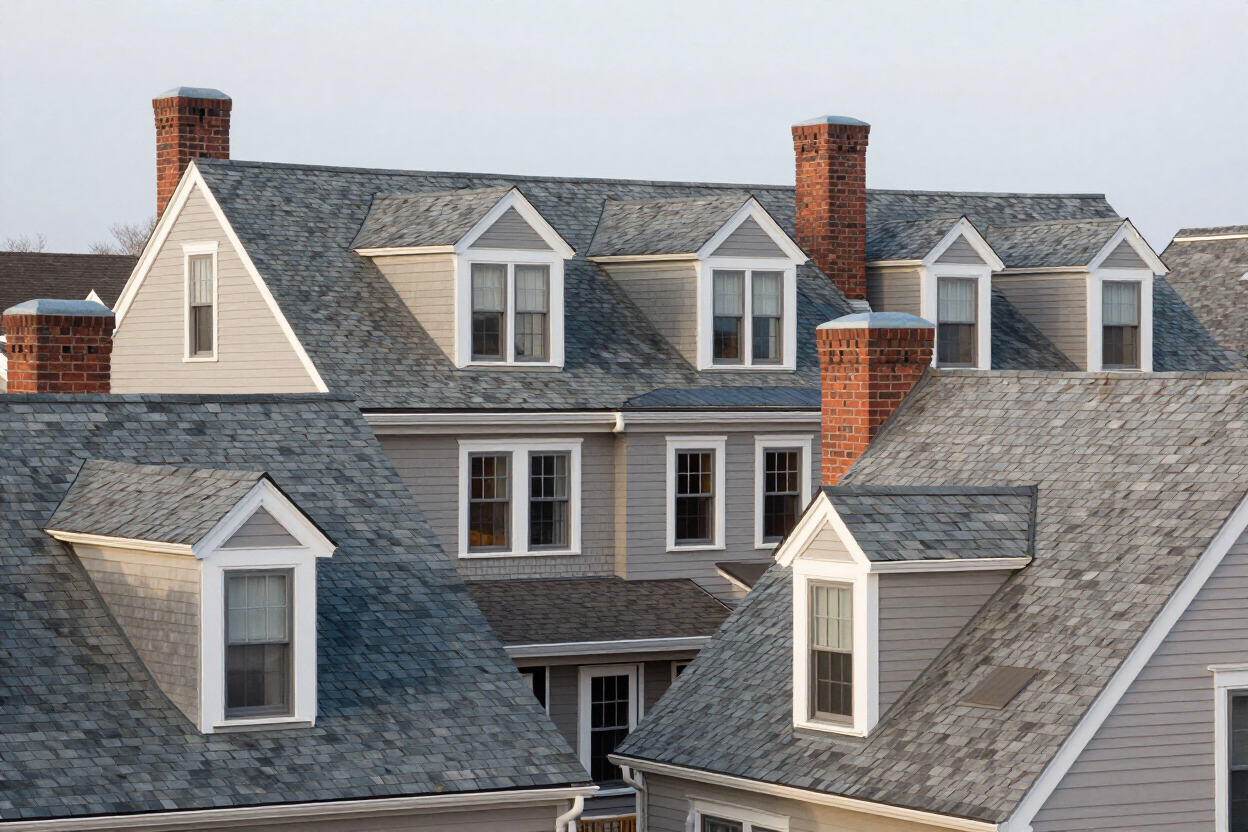
Specialty & Transition Systems
Properties with mixed slopes, dormers, skylights, chimneys, or additions sometimes require hybrid approaches — combining pitched-roof materials with low-slope transitions or specialty flashing details. Ask about your property's specific configuration.
What Happens on Installation Day
Roof replacement is a structured process that moves from preparation through inspection. Knowing what to expect helps you plan around the schedule and feel confident in the outcome.
1
Deck Inspection & Tear-Off
We remove the existing system and inspect the decking for rot, soft spots, or structural concerns. Damaged deck sections are replaced before any new material goes down.
2
Underlayment & Waterproofing
Ice-and-water shield is installed at eaves, valleys, and penetrations — the areas most vulnerable to ice dams and wind-driven rain. Synthetic or felt underlayment covers the field of the roof.
3
Flashing, Drip Edge & Ventilation
Metal drip edge, step flashing, counter-flashing, and pipe-boot flashing are set before field materials are installed. Ridge ventilation and intake ventilation are reviewed and corrected where needed.
4
Material Installation
Shingles, panels, or membrane are installed to the manufacturer's pattern and fastening requirements. Starter courses, hip and ridge caps, and all penetration details are completed to the full system specification.
5
Cleanup, Review & Walk-Through
We collect and remove all materials, run a nail sweep, and do a site walk-through with you to review the finished work before we consider the job complete.
Warranty Coverage — What to Ask and What to Verify
Workmanship Warranty
A workmanship warranty covers the quality of the installation — labor, flashing details, penetration seals, and the work our crew performs. Terms and duration are disclosed in the written contract. Ask about what is covered, the claims process, and any conditions that may affect coverage before work begins.
Manufacturer Material Warranty
Roofing materials carry manufacturer warranties against defects in the product itself. Duration, transferability, and qualifying conditions vary by manufacturer and product line. Specific manufacturer programs and extended warranty tiers are published after credentials are verified. Ask which manufacturer and product line is being specified for your project and request the warranty documentation before signing.
Until manufacturer documentation is confirmed and on file, this page identifies warranty types rather than specific program names or durations. We do not publish warranty claims we cannot verify. Ask our team for current documentation applicable to your project.
Common Roof Replacement Questions
These are the questions property owners ask most often before committing to a replacement. If yours is not listed, call or text 203-309-9656.
How long does a roof replacement take?
Most residential replacements are completed in one to two days, depending on roof size, pitch, complexity, deck condition discovered during tear-off, and weather. We provide a project timeline estimate before scheduling.Will the work disrupt my household?
There is noise from removal and installation throughout the workday. We protect plantings and walkways, use tarps to collect debris, and run a nail sweep at completion. Residents can typically remain in the home; ask if you have specific concerns about pets, young children, or sensitive equipment.Do I need a permit for roof replacement in Connecticut?
Many Connecticut municipalities require a building permit for full tear-off and replacement. RodyBen7 confirms permit requirements for the project location and handles the application process. Requirements vary by town — ask your project coordinator for the specifics applicable to your address.What roofing materials hold up near the New England coast?
Coastal locations face salt air, high humidity, elevated wind speeds, and thermal cycling. Metal roofing in aluminum or coated steel and high-wind-rated asphalt shingles with sealed fasteners perform well in these conditions. Cedar requires diligent maintenance in coastal environments. Ask about products rated for high-wind and salt-air exposure for your specific location.How do I know if my deck needs to be replaced?
Deck condition is fully visible only after tear-off. We inspect and probe decking during the replacement and replace any sections showing rot, delamination, or structural compromise before installing new materials. We report deck condition to you before proceeding with additional replacement, so there are no surprises.What is the difference between an architectural shingle and a three-tab shingle?
A three-tab shingle is a single-layer product with a flat, uniform appearance. An architectural (laminated) shingle is a multi-layer product with a dimensional, textured look that better replicates wood shake or slate. Architectural shingles are heavier, carry longer manufacturer warranties in most product lines, and are the current standard for residential replacement in this region.Will my homeowners insurance cover a roof replacement?
Insurance may cover sudden, storm-related damage subject to the policy terms, deductible, exclusions, and the carrier's coverage decision. Wear, age, and maintenance-related deterioration are typically excluded. RodyBen7 can document visible damage and provide a repair or replacement scope — the insurer determines whether a claim is approved and at what amount.
Thank you! We received your request and will be in touch shortly to schedule your free inspection.
Get a Replacement Estimate
Whether your roof is showing its age, recovering from storm damage, or simply past the point where repair makes sense, start with a free inspection and a straightforward estimate. We inspect accessible areas, explain what we find, and give you a clear scope and price so you can make an informed decision. No pressure — just the information you need to move forward.